
Murcia
The Region of Murcia is a sunny area in south-eastern Spain. It sits between Andalusia, Castilla-La Mancha, and the Valencian Community. The Mediterranean Sea borders the region to the east. The capital city is Murcia, and other important places include Cartagena and Lorca.
The Region has a warm climate, long summers, and mild winters. Many people call it “the orchard of Spain” because it grows a large share of the country’s fruits and vegetables. Farmers use the fertile land near the Segura River to grow citrus fruits, lettuce, and tomatoes.

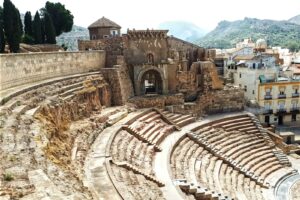
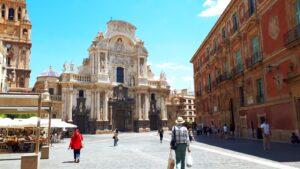
Visitors enjoy the Region of Murcia for its beaches, history, and food. The coast is called the Costa Cálida, which means “warm coast.” Inland areas offer mountains, castles, and small traditional towns. The region gives travellers a mix of sea, culture, and nature.
Murcia also offers easy access to nearby regions such as Alicante and Granada, which makes it a good base for travel in south-east Spain.
What the region is known for
The Region of Murcia is known for its rich history, farming, and coastline. The capital city, Murcia, stands out for its baroque cathedral, lively squares, and tapas culture. The city mixes old streets with modern life.
The region also includes the historic port city of Cartagena. Cartagena shows strong Roman and naval history. Visitors explore Roman theatres, ancient walls, and a deep natural harbour. One of the top sites is the Roman Theatre Museum.
Official website: https://teatroromano.cartagena.es/
Another important city is Lorca, known for its castle and religious heritage. Lorca also hosts large Holy Week celebrations with detailed processions and historic costumes.
The region also protects natural spaces. One key area is the Sierra Espuña Regional Park. It offers hiking trails, pine forests, and mountain views. Visitors walk, cycle, and enjoy nature far from the coast.
Official website: https://www.murcianatural.carm.es/
The Region is also famous for its beaches along the Costa Cálida. The Mar Menor, a large saltwater lagoon, attracts swimmers and water sports lovers. Its calm, warm water makes it ideal for families.
Food plays a big role in the identity of the region. People eat fresh vegetables, rice dishes, seafood, and stews. A famous local dish is “zarangollo,” made with eggs, courgettes, and onions. Another is “caldero,” a rice and fish dish from the coast.
Festivals also define the region. The Spring Festival in Murcia city includes parades, flowers, and traditional dress. In Cartagena, the Carthaginians and Romans Festival recreates ancient battles with costumes and performances.
The region also has strong agricultural traditions. Farmers work the fertile valleys and export produce across Europe. This gives Murcia an important role in Spain’s food industry.
Towns in Murcia
Abarán – is famous for its historic water wheels, which show how traditional irrigation shaped life in this part of Spain
Águilas – combines stunning beaches, rich history, excellent seafood, and a relaxed Mediterranean lifestyle
Blanca – offers visitors medieval streets, historic buildings, art galleries, scenic walking trails, and riverside viewpoints
Bullas – is famous for its vineyards, excellent wines, history, nature, gastronomy, all combined in a relaxed atmosphere
Cabo de Palos – combines dramatic coastal scenery, crystal-clear waters and a relaxed Mediterranean atmosphere
Caravaca de la Cruz – attracts pilgrims, history lovers and travellers with its combination of culture, nature and traditional festivals
Cartagena – a historic port city beside the Mediterranean Sea
Cieza – known for its beautiful landscapes, fruit orchards, rich history and authentic Spanish experience
Costa Cálida – this beautiful stretch of coastline includes stunning beaches and rich cultural heritage
La Manga del Mar Menor – is known for its golden beaches, calm waters, and year-round sunshine
Lorca – this historic town combines centuries of heritage with a vibrant modern atmosphere
Mazarrón – includes both the historic inland town of Mazarrón and the popular coastal area of Puerto de Mazarrón
Murcia – a warm and historic city known for its rich history
Ojós – a tiny town that offers narrow lanes, colourful flowers, hanging bridges and a quirky nativity museum
San Pedro del Pinatar – has become a favourite destination for visitors seeking both relaxation and outdoor adventure
Yecla – blends history, wine and wild nature and best of all, it hasn’t been swamped by tourists yet
How to get to Murcia
You can reach the Region of Murcia easily by air, road, and rail. The main gateway is Murcia city, but travellers can also access Cartagena and other towns by good transport links.
The main airport is Región de Murcia International Airport. It sits near the town of Corvera, about 25 kilometres from Murcia city. It handles flights from many European destinations. Book flights.
Another nearby option is Alicante-Elche Miguel Hernández Airport. It sits about 70–100 kilometres from many parts of the region. It offers a wider range of international flights. Book flights.
Travellers often arrive by train. Renfe connects Murcia city with other major Spanish cities. High-speed and regional trains link Murcia with Madrid, Alicante, and Valencia. This makes rail travel a simple and comfortable option. Buy Tickets.
Road travel also works well. The A-7 and AP-7 motorways connect the region with the rest of Spain’s Mediterranean coast. Drivers can reach Murcia, Cartagena, and Lorca with ease. Hire a Car.
Bus services run between all major towns in the region. Regular routes connect Murcia city with Cartagena, Lorca, and coastal resorts along the Costa Cálida. This helps visitors travel without a car. Buy Tickets.
The port of Cartagena also plays an important role. Cruise ships often stop there, and ferries connect to other Mediterranean destinations. Many visitors explore the Roman sites and old town during short stays.
When you travel around the Region, you can see how varied it is. One day you can walk through historic city streets. The next day you can relax on a beach or hike in the mountains. This variety makes the region attractive to many types of travellers.
The Region offers sunshine, history, food, and nature in one place. It stays less crowded than many other Spanish regions, so visitors often enjoy a more relaxed experience. Whether you explore its cities like Murcia and Cartagena, or its beaches and mountains, the region gives a full picture of authentic Spain.