
Galicia
Galicia is a region in northwest Spain. The region has a population of 2.7 million scattered across four provinces: A Coruña, Lugo, Ourense and Pontevedra.
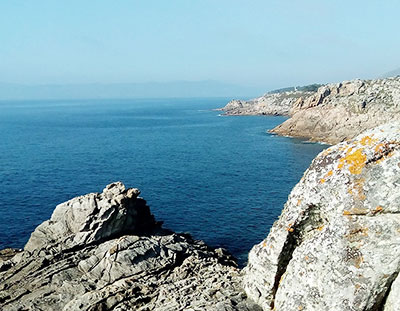
Galicia is known for its rugged Atlantic coastline with many inlets. It also has green mountainous areas inland. The region’s high rainfall makes it extremely green and productive.
The capital is Santiago de Compostela, famous for its Camino Santiago. People have been doing the Camino Santiago since the Middle Ages. The Camino ends at the Cathedral of Santiago, where the remains of St James are buried.
The Galician coastline and cooling winds from the Atlantic make for lower summer temperatures. Because of this, Galicia is a popular summer destination for Spaniards seeking relief from summer heat.
There is a deep Celtic influence in Galicia. As a result, Celtic symbols can be seen everywhere. Galician bagpipes are a traditional instrument.
The region is home to many unusual Galician traditions that you can read more about here.
If you’d like help planning your Galician adventure, you might find our 7 Day Itinerary for Galicia useful.
Galician towns and regions
Read information and tips on these Galician Cities, Towns and Regions:
A Coruna – a pretty beachside and port city in the North of Galicia with history, atmosphere and great food
Allariz – charms visitors with museums, riverside parks, and a genuinely warm welcome
A Pobra de Trives – offers beautiful scenery, historic streets, traditional festivals and excellent local food
Ares – offers golden beaches, green hills, fishing boats, relaxed locals and feels like a genuine Galician town rather than a tourist trap
Baiona – historic old town, impressive fortress, sandy beaches and maritime heritage attracting visitors throughout the year
Betanzos – is a historic Galician town famous for medieval architecture, lively festivals, and its Spanish omelette festival
Bueu – offers stunning beaches, fresh seafood, peaceful walking trails and a rich maritime heritage
Burela – offers attractive beaches, fresh seafood, coastal walks and a welcoming atmosphere
Camariñas – dramatic Atlantic scenery, beautiful beaches, rugged cliffs, excellent seafood and a welcoming atmosphere
Cambados – is a picturesque Galician fishing town renowned for Albariño wine, historic plazas, and dramatic wild Atlantic coastline
Cangas – a pretty seaside town with plenty to see and do
Carnota – this charming destination is known for its stunning beaches, traditional architecture and rich Galician culture
Castro Caldelas – sits above the Sil canyon with a castle watching over stone streets and terraced vineyards
Combarro – this historic fishing town attracts visitors with its stone houses, narrow lanes and famous waterfront granaries
Corcubión – this historic fishing town combines stunning sea views, rich heritage and a relaxed atmosphere
Costa da Morte – a peaceful destination that attracts nature lovers, hikers, photographers and travellers looking for the authentic Galicia
Ferrol – a historic coastal city best known for its naval history
Fisterra – attracts pilgrims, nature lovers, photographers and travellers seeking some of the most spectacular scenery in Spain
Foz – is known for its wide sandy beaches, attractive harbour and relaxed atmosphere
Laxe – is known for its stunning beaches, dramatic Atlantic scenery and traditional fishing heritage
Laza – home to Spain’s wildest carnival tradition
Lugo – offers remarkably preserved Roman walls, charming squares, impressive churches, museums and outstanding Galician cuisine
Malpica de Bergantiños – this traditional fishing town offers beautiful beaches, dramatic landscapes and a strong maritime heritage
Marín – combines maritime history, attractive beaches, scenic walking trails and excellent seafood
Monforte de Lemos – offers a perfect blend of culture, architecture, gastronomy and outdoor activities
Mugardos – is a hidden gem with fishing boats, old stone houses and a 16th-century castle guarding the water’s edge
Muros – combines maritime heritage, beautiful beaches, excellent seafood and an authentic Galician experience
Muxía – this charming fishing town combines stunning natural scenery, rich maritime traditions and deep religious heritage
O Cebreiro – an enchanting villages and a famous stop along the Camino de Santiago
O Grove – is a Galician fishing town celebrated for fresh seafood, coastal walks, annual seafood festival and the scenic Toxa island
Ortigueira – stays wonderfully peaceful except once a year when thousands of visitors from across Europe attend its folk festival
Ourense – is an inland Galician city known for natural thermal hot springs, historic bridges, and charming old-town architecture
Padron – home of the famous Pimientos de Padrón found on menus throughout Spain
Pontevedra – is a walkable Galician city celebrated for its pedestrian-friendly old town, granite plazas, and rich maritime heritage
Portomarín – delivers something special whether you love history, food, or scenic walks
Rías Baixas – famous for its sandy beaches, charming fishing towns, fresh seafood and world-class Albariño wine
Ribadavia – mixes cobbled medieval streets with the region’s most famous white wine
Ribadeo – is a coastal Galician town famed for the stunning Cathedrals Beach, historic old town, and scenic boat tours
Ribeira Sacra – is famous for its steep river canyons, ancient monasteries, and exceptional vineyards
Sabucedo – this peaceful village comes alive in July during its world-famous Rapa das Bestas festival
Sada – Sada is a small seaside town sitting on the shores of the Ria de Betanzos
Sargadelos – has produced some of Spain’s most recognisable porcelain since 1806. It offers riverside walks and a peaceful pace of life
Santiago de Compostela – is Galicia’s spiritual capital, famed as the legendary Camino pilgrimage destination and stunning cathedral city
Santo Estevo – is best known for the magnificent Monastery of Santo Estevo de Ribas de Sil which now runs as a luxury Parador
Sanxenxo – A popular seaside resort town and summer destination for many Spaniards
Sarria – offers plenty beyond the Camino including medieval churches, riverside walks and hearty Galician food
Tui – combines a rich history, impressive architecture and beautiful natural surroundings
Vigo – Galicia’s most populous and important fishing city with excellent food and rich history
Vilagarcia de Arousa – A small port and fishing town well placed for exploring the region
Vilanova de Arousa – a pretty seaside town with a relaxed atmosphere and amazing seafood
Viveiro – combines a beautiful historic centre, sandy beaches, green hills and authentic Galician traditions
Galician cuisine
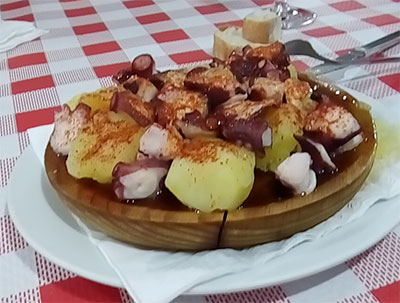
Galicia is famous for its seafood including all varieties of shellfish. Also important are empanadas and nobody does potatoes quite as well as Galicians. No meal is complete without some local rustic bread as well. The most famous Galician dish is Pulpo a Feira. This simple dish is octopus, potatoes, pimenton and olive oil. Sounds simple, but you have to try it if you visit Galicia. Read more about Galician food here..
Getting to Galica
There are regular flights to all the major cities of Galicia, especially to Santiago de Compostela. Flying time from Londons Stanstead airport to Santiago with Ryanair is just over 2 hours. Flying time from New York to Santiago is close to 10 hours with a change along the way.
After landing in Santiago, you can explore the rest of the region on the excellent rail link north and south. It takes only 30 minutes from Santiago by train to reach A Coruna in the north. Vigo in the south takes around an hour. Buy Tickets.
Cruise liners stop in A Coruna in the north and Vigo in the south.
Santiago de Compostela is a 6 to 7 hour drive from Madrid.
If you are in Portugal, it is only a 1 hour 30 minute drive from Porto to Vigo in the south of Galicia.
The high-speed rail connection to Galicia was recently completed. Because of this, the rail travel time from Madrid to Santiago de Compostela is now just over 3 hours.