
3 Foods to Try in Santiago de Compostela
Santiago de Compostela sits at the end of the Camino de Santiago, and food here feels like a reward. Centuries of pilgrims have shaped the local menu. Galician cooking leans on fresh seafood, simple seasoning, and generous portions. Nothing is fussy, yet everything is full of flavour.
Below are three dishes you shouldn’t leave without trying. Each one carries its own story, and each one tastes better in the right setting. So grab a fork, and let’s dig into Santiago’s tastiest traditions.
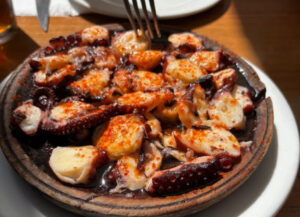

Pulpo a Feira
Pulpo a feira, also called pulpo a la gallega, is Galicia’s most famous dish. Tender octopus gets boiled until soft, then sliced into rounds. Cooks finish it with olive oil, coarse salt, and smoky paprika. Traditionally, it’s served on a wooden plate, never a regular one. The dish began life at rural village fairs, hence its name. Farmers and travellers gathered around big pots of bubbling octopus, and the tradition stuck. Getting the texture right is genuinely tricky, so a good pulpería is worth seeking out.
3 Places to try it
Los Sobrinos del Padre Benito is widely thought to be the oldest pulpería in Santiago. Tucked behind the cathedral, it still totals bills the old-fashioned way, chalked straight onto the bar. The octopus here is famously tender, and prices stay lower than at flashier spots nearby. Regulars also rave about the tortilla and the cured chorizo. Reservations aren’t usually needed, though it can get busy at lunchtime. Get directions.
Bodegón Os Concheiros has served pulpo for nearly fifty years, with a short break in 2024 before reopening under new owners. The new team kept the classic octopus recipe while adding grilled meats to the menu. It sits a little outside the historic centre, along the Camino route itself, so pilgrims often stop in. Expect a no-frills tavern feel, with fair prices and hearty portions. Booking ahead is a good idea on weekends. Get directions.
O Gato Negro is one of the oldest taverns in the old town, with wooden floors and a lively, chatty crowd. Locals have eaten here for decades, drawn by fresh mussels, zamburiñas, and excellent pulpo a la gallega. There’s no formal menu on the wall; instead, staff simply tell you what’s fresh that day. Because it’s compact and popular, arriving early or booking is wise. Otherwise, be ready to wait a little for a table. Get directions.
Tarta de Santiago
Tarta de Santiago is a dense, moist almond cake, and it’s the city’s signature dessert. Made simply from ground almonds, sugar, and eggs, it needs no flour at all. That makes it naturally gluten-free, which is a nice bonus for many visitors. The cake’s history goes back centuries, though its famous cross design is more recent. In 1924, a Santiago pastry maker named José Mora Soto began decorating the cake with the Cross of Saint James. The idea caught on quickly, and now no proper Tarta de Santiago is complete without it. Today, the cake even holds Protected Geographical Indication status, so its recipe and origin are safeguarded by law.
3 Places to try it
The Convento de San Paio de Antealtares offers one of the most memorable ways to buy this cake. Cloistered nuns bake it themselves and sell it through a revolving wooden hatch, called a torno. You never actually see the sellers, which makes the whole experience feel wonderfully old-fashioned. The convent sits right on Praza da Quintana, just behind the cathedral. No reservation is needed; simply ring the bell and wait for your turn. Get directions.
Casal Cotón has sold traditional Galician products for more than thirty years from its shop on Rúa do Franco. Alongside cheeses, cold cuts, and liqueurs, its Tarta de Santiago is a firm favourite with visitors. Staff often offer small tastings at the door, so you can sample before buying. They also stock a gluten-free version, useful if you’re catering to different diets. As it’s a shop rather than a sit-down restaurant, no booking is required. Get directions.
Pastelería Ébano is a modern bakery with several branches around the city, including one on Rúa do Vilar. Its Tarta de Santiago sticks closely to the traditional recipe, dense and rich with almond flavour. The shop also does a brisk trade in other Galician sweets and fresh bread. Because it’s a bakery rather than a formal restaurant, you can simply walk in any time. It’s a handy stop if you’re wandering the old town and fancy a sweet break. Get directions.
Empanada Gallega
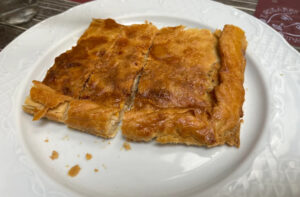
Empanada gallega is Galicia’s answer to the pie, and it’s a proper regional icon. Thin bread-like pastry wraps around a savoury filling, then gets baked in large trays. Tuna with peppers and onion is the classic choice, though fillings vary by household and by season. Unlike handheld pasties found elsewhere, this empanada gets cut into slices, much like a pizza. It was designed to travel well, so fishermen and farmers once carried it in baskets and boats. Every family in Galicia guards its own version, which means no two empanadas taste quite the same.
3 Places to try it
Panadería Liste sits right beside the Mercado de Abastos and has become a local institution. The baker uses the same simple dough for his empanadas as he does for his everyday bread. Tuna and cod remain the top sellers among locals, while visitors often go for scallop or cockle versions in summer. There’s nothing fancy about the shop, just honest baking done the traditional way. It’s a walk-in bakery, so no reservation is necessary. Get directions.
O Gato Negro also deserves a second mention here, since its empanada gallega is just as popular as its octopus. The kitchen bakes it fresh, with a filling that changes depending on what’s good that day. Wooden benches, whitewashed walls, and a buzzing atmosphere make this tavern feel authentically Galician. As before, this spot fills up fast, so arriving early helps. Consider booking if you’re visiting during peak tourist season. Get directions.
María Castaña is a favourite among locals for its empanada, served alongside classic Galician stews and fresh seafood. The restaurant leans into traditional decor, with soft background music adding to the atmosphere. Portions are generous, and the empanada consistently gets singled out by regulars. It sits on Rúa da Raíña, close to the cathedral, making it easy to find after sightseeing. Since it’s a popular spot, booking ahead is recommended for dinner. Get directions.
Final thoughts
Santiago de Compostela rewards hungry travellers. From smoky octopus to almond cake and hearty empanada, each dish tells a piece of Galician history. Best of all, you don’t need a fancy restaurant to enjoy any of them. Simple taverns, family bakeries, and market stalls do it best. So wander the old town, follow your nose, and taste your way through the city. Chances are, you’ll leave already planning your next visit.