
3 Foods to Try in Barcelona
Barcelona feeds you before it shows you the sights. Walk any street, and you’ll catch the smell of garlic, olive oil, and toasted bread. This city takes food seriously, and locals love to share their favourites. You don’t need a big budget or a fancy booking to eat well here. Some of the best bites come from tiny bars with paper napkins and standing room only. This guide covers three classic foods to try in Barcelona. Each dish tells a story about the city’s history. Every spot below skips the Michelin stars and hotel price tags too. Let’s get stuck in.
Pa amb Tomàquet
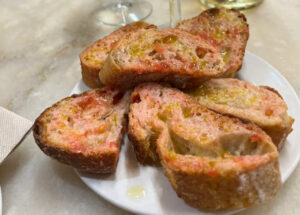
Pa amb tomàquet sounds simple, and that’s the whole point. Bread gets rubbed with ripe tomato, drizzled with olive oil, then sprinkled with salt. Nobody agrees on exactly when it started, but most food historians link it to the 19th century, after tomatoes arrived from the Americas. Farmers rubbed tomato onto stale bread to soften it and add flavour, and the habit spread fast across Catalonia. Today, you’ll find pa amb tomàquet on almost every table, from breakfast through to dinner. Restaurants often bring bread and a whole tomato to your table, so you can rub it yourself. Locals argue endlessly about the right ratio of oil to tomato. Try it once, and you’ll understand the fuss.
3 Places to try it
Quimet & Quimet has served Poble-sec since 1914, run by the same family for five generations. There’s no seating, so you eat standing at the counter with locals. Bottle-lined walls surround a busy bar known for its montaditos, tiny open sandwiches piled high with toppings. Pa amb tomàquet anchors many dishes here. Space is tight, so arrive early, since reservations aren’t accepted. Get directions.
El Xampanyet has poured cava and served tapas in the Born since 1929. The same family has run this bodega for generations, and the blue-tiled walls haven’t changed much either. Order a glass of house cava with pa amb tomàquet and Cantabrian anchovies. It gets loud and busy, especially at weekends. There’s no website and no bookings, which only adds to the old-school charm. Get directions.
Cerveseria Catalana sits in the Eixample and pulls in a steady crowd of locals and visitors. This lively bar serves pa amb tomàquet alongside a huge menu of hot and cold tapas. The kitchen runs non-stop from morning until late, so you can drop by anytime. Reservations aren’t taken, so arrive outside peak hours to skip the queue. Get directions.
Bombas de la Barceloneta
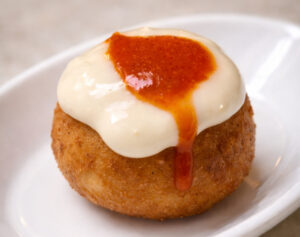
A bomba looks like a giant croquette, but don’t let the size fool you. This fried potato ball hides a filling of minced meat at its centre, coated in breadcrumbs and deep fried until golden. Cooks top it with spicy sauce and garlic aioli. The bomba was born in Barceloneta, Barcelona’s old fishing quarter, sometime in the 1940s. Legend says a young boy tasted it and shouted “this is a bomb!”, and the name stuck. Workers loved it because it was cheap, filling, and easy to eat on the go. Every bar in Barceloneta claims to make the best version, and rivalries run deep.
3 Places to try it
La Cova Fumada claims to be the birthplace of the bomba, and most locals agree. This no-frills tavern has run since 1944, hidden behind an unmarked door in Barceloneta. The Solé family still cooks here today, using recipes passed down from the founder’s grandmother. Expect a cramped space and a chalkboard menu. Booking isn’t possible, so arrive early and be ready to wait. Get directions.
Bar Jai-Ca has fed Barceloneta locals since 1955, when two brothers first opened its doors. Now run by a third generation, the bar serves fresh seafood alongside a much-loved bomba and cold vermouth. The terrace fills up fast, so come early and hungry. Weekday lunches tend to feel calmer than weekend evenings. Get directions.
El Vaso de Oro has poured its own home-brewed beer in Barceloneta since 1962. Waiters in classic uniforms dash along the narrow bar, serving a packed crowd most nights. The bomba here comes with a rich, punchy sauce that pairs perfectly with a cold beer. Reservations are accepted, and booking ahead is wise if you want a table. Get directions.
Crema Catalana
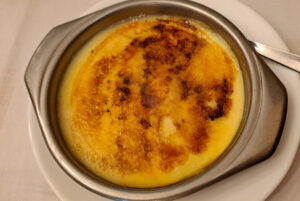
Crema catalana is Catalonia’s answer to crème brûlée, though locals insist their version came first. This custard combines milk, egg yolks, sugar, and citrus zest, gently thickened over heat, then topped with a layer of caramelised sugar that cracks under your spoon. Historians trace the dish back centuries, with mentions dating to medieval times. Families traditionally made it for Saint Joseph’s Day on 19 March, which is why it’s sometimes called “crema de Sant Josep.” Lemon and cinnamon give it a brighter finish than its French cousin. Order it cold, and let that sugar crust shatter satisfyingly under your spoon.
3 Places to try it
Can Culleretes holds the title of Barcelona’s oldest restaurant, open since 1786. The Agut Manubens family has run the kitchen since 1958, keeping traditional Catalan recipes alive. Faded murals and old photographs line the dining room, giving it a real time-capsule feel. Their crema catalana follows a recipe barely changed in decades. Booking ahead is strongly advised, especially at weekends. Get directions.
Granja M. Viader opened as a small dairy shop in the Raval back in 1870. The Viader family still runs it today, five generations later. This cosy café even invented Cacaolat, Spain’s beloved chocolate milk drink, in 1931. Their crema catalana follows a century-old recipe, silky and fragrant with citrus. No booking is needed; just find a seat and settle in. Get directions.
Els Quatre Gats opened in 1897 as a bohemian tavern for Barcelona’s artists and dreamers. Picasso himself designed the original menu cover, and the café still displays his work today. Finish a plate of Catalan classics here with their crema catalana. Given its fame with visitors, booking a table in advance is a smart move. Get directions.
Final Thoughts
Barcelona’s food scene runs deeper than any tourist menu. Pa amb tomàquet, bombas, and crema catalana each carry a piece of the city’s history in every bite. Best of all, you don’t need deep pockets or a fancy reservation to try them. Just follow the locals into a busy bar, and dig in. These dishes taste better shared, so bring friends and order plenty. Next time you’re wandering Barcelona’s streets, skip the tourist traps and follow your nose instead. The best meals in this city often come from the simplest places.