
3 Foods to Try in Cádiz
Cádiz is one of Europe’s oldest cities, and its food proves it. Phoenician sailors, Roman traders and Atlantic fishermen have all left their mark on the menu. Better still, you can eat brilliantly here without spending much. The best bites often come in paper cones or at busy tavern bars. So, which dishes should you try first? Here are three Cádiz classics, plus three relaxed, wallet-friendly spots for each. Grab a napkin and let’s dig in!
Tortillitas de camarones
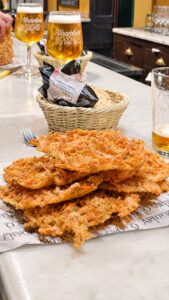
Tortillitas de camarones are crispy shrimp fritters, and they are pure Cádiz. Cooks mix tiny shrimp with chickpea flour, wheat flour, onion and parsley. Then they fry thin spoonfuls until the edges turn golden and lacy. Locals say a great tortillita is more air than batter. The dish probably began in Cádiz or nearby San Fernando. Some historians think the old Genoese community inspired it, thanks to their chickpea pancakes. Eat them hot, because they lose their crunch quickly. Many bars serve them with a glass of cold manzanilla, the local sherry.
3 Places to try it
Casa Manteca is a legendary tavern in the La Viña district. Its walls are covered in bullfighting and carnival memorabilia, so you get a history lesson with your snack. The bar has fed locals for decades. It is famous for its tortillitas, cured meats and lively, crowded atmosphere. You cannot really book a table here. Instead, arrive just before opening and grab a spot at the bar. Get directions.
La Tabernita sits on Calle Virgen de la Palma, in the old fishing quarter. It is a friendly neighbourhood hangout, and many visitors name its tortillitas as the star dish. The cuttlefish meatballs, which turn black from the ink, are worth ordering too. The place is small, so go early or reserve a table if you can. In short, it is a cosy spot for a relaxed bite. Get directions.
La Punta del Sur is a nautical-style bar on Calle San Félix, a short stroll from La Viña’s lanes. Reviewers rave about its tortillitas, its fried fish and its truffled potato salad. The mood is casual, and the prices are fair. Tables fill quickly at weekends. Therefore, book ahead if you want to sit down rather than squeeze in at the bar. Get directions.
Pescaíto frito
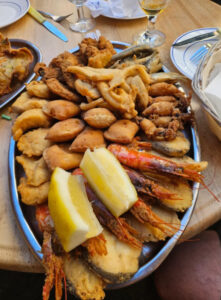
Pescaíto frito means “little fried fish”, and it is the dish that defines Cádiz. Cooks coat small fish, squid and shellfish in flour. Then they flash-fry everything in hot oil. The result is light, golden and never greasy. The tradition goes back centuries. Around the time of the 1812 Cortes of Cádiz, street sellers reportedly sold fried fish to crowds leaving the theatres. Today, locals still buy it in paper cones called cartuchos. Squeeze on some lemon and eat it while it crackles. A cold glass of fino makes it even better.
3 Places to try it
Freiduría Las Flores stands on Plaza Topete, better known as the Plaza de las Flores. Flower kiosks surround it, so the setting is lovely. The shop is famous for its paper cones of fried fish, which are now part of Cádiz life. It also makes fresh churros in the morning. The place is always busy, but the staff work fast. You can buy a cone to go or find a table inside. Get directions.
Freiduría Las Flores II is the sister branch on Calle Brasil, close to the beach. It serves the same fried favourites at friendly prices. Reviewers love the fresh fish and the quick service. Moreover, it makes a handy lunch stop after a morning on the sand. The menu also includes rice dishes and cold starters. Arrive early, or reserve a table at busy times. Get directions.
Taberna El Tío de la Tiza is a long-standing bar in La Viña, set on its own lively little square. Fried fish is its main claim to fame. However, the grilled mackerel and potato salad win plenty of fans too. The terrace is perfect for people-watching with a drink in hand. Many locals call it one of the best seafood bars in town. In summer, it books up well in advance, so reserve a table before you go. Get directions.
Atún rojo de almadraba
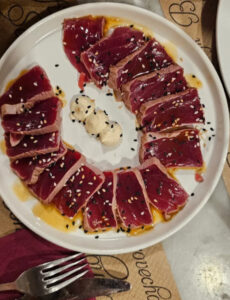
Almadraba tuna is the jewel of Cádiz seafood. Every spring, wild Atlantic bluefin tuna swim past the coast on their way to spawn. Fishermen catch them using the almadraba, a system of fixed nets that is around 3,000 years old. The word comes from an Arabic term meaning “place of fighting”. The season runs from late April to June. Then expert cutters carve the fish by hand in a show called the ronqueo. Chefs serve the meat raw, lightly seared, in tomato sauce or cured as mojama. Fresh tuna tastes best in season, so ask what is on the menu.
3 Places to try it
Taberna La Sorpresa is a tiny bar in the old El Pópulo quarter, on Calle Tirso de Molina. Tuna is its speciality, and the team serves it raw as tartar or lightly cured as mojama. The setting is small and full of character. Because space is limited, booking is wise. Also, check opening days before you go, as visitors report that it closes on Mondays. Get directions.
La Tapería de Columela is a lively tapas bar on Calle Columela, just steps from the Plaza de las Flores. Locals love its mix of traditional and modern tapas at good prices. Its red tuna tartar is a regular favourite. The bar fills up fast. So, arrive when it opens, around 1pm or 8.30pm, or call ahead to reserve a spot inside. Get directions.
Casa Lazo is a classic neighbourhood bar on Calle Barrié. Fans praise its tuna tataki, which is quickly seared on the outside and tender within. It feels like a true local favourite, with no fuss and fair prices. Visitors also mention that it stays open on Mondays, when many other places close. That makes it a handy backup plan. Reservations are not usually needed, but arriving early helps. Get directions.
Final thoughts
There you have it: three tasty ways to eat like a local in Cádiz. Start with crispy tortillitas in La Viña. Next, grab a paper cone of pescaíto frito on a sunny square. Finally, finish with fresh almadraba tuna, ideally in late spring. Each dish tells a story about the city’s long link with the sea. Better still, none of these spots will empty your wallet. So, pack an appetite, arrive early and enjoy every bite. Buen provecho!