
3 Foods to Try in Seville
Seville doesn’t rush its food, and neither should you. Wander the old quarter, and the smell of frying garlic follows you everywhere. This city built its cooking around slow simmers and shared plates. You don’t need a big budget or a fancy booking to eat well here. Some of the best dishes come from bars that have barely changed in centuries. This guide covers three classic foods to try in Seville. Each dish carries real Andalusian history in every bite. Every spot below skips the Michelin stars and hotel price tags too. Let’s get started.
Espinacas con Garbanzos
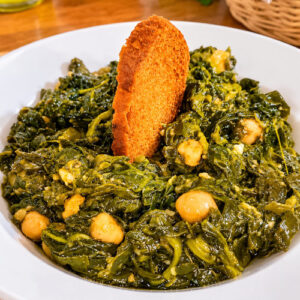
Espinacas con Garbanzos might be the humblest tapa in Seville, yet locals adore it. Cooks simmer spinach and chickpeas together with garlic, cumin, and paprika. The dish traces back to Moorish Andalusia, when spices travelled north from Africa. Chickpeas and spinach were cheap, filling, and perfect for meat-free Lenten meals. Over time, the tapa outgrew its religious roots and became an everyday favourite. Sevillanos still eat it most often on Fridays during Lent, out of habit more than duty. The texture should turn almost creamy, thanks to a slow-cooked garlic and bread paste called majado. Order a small plate with crusty bread, and you’re tasting genuine Sevillian comfort food.
3 Places to try it
El Rinconcillo has served tapas in Seville since 1670, making it the city’s oldest bar. The De Rueda family has run it since 1858, keeping recipes largely unchanged. Their espinacas con garbanzos remains one of the most requested tapas on the menu. Waiters still chalk your order onto the ancient mahogany counter by hand. Actors Harrison Ford and Calista Flockhart reportedly loved this dish during a visit. Get directions.
Las Teresas has poured wine in the Santa Cruz quarter since 1870. Hams hang from the ceiling, and the walls carry over a century of memories. Espinacas con garbanzos sits proudly alongside their famous cured meats and cheeses. Locals and visitors squeeze in together at the compact wooden bar. Booking ahead is a good idea for dinner, especially at weekends. Get directions.
Bodega Santa Cruz “Las Columnas” sits right where the old Jewish quarter meets the cathedral area. This lively, noisy bar has served classic Sevillian tapas for generations. Espinacas con garbanzos features regularly alongside their famous pringá sandwiches. Expect to order at the counter, then carry your own plate to a table. No booking is needed; just squeeze in wherever there’s room. Get directions.
Salmorejo
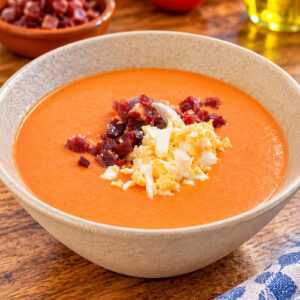
Salmorejo looks like gazpacho’s thicker, richer cousin, and in many ways, it is. Cooks blend ripe tomatoes with stale bread, garlic, and a generous glug of olive oil. The bread thickens it into something closer to a chilled tomato cream. Cooks traditionally topped it with chopped boiled egg and crumbled jamón. Córdoba usually claims credit for inventing salmorejo, but Seville has long made it its own. Locals serve it ice-cold during the brutal summer months, when the city can hit 40 degrees. Some bars add a twist, pairing it with cod or fried fish. Order a bowl, and you’ll understand why it beats gazpacho on a hot afternoon.
3 Places to try it
Casa Morales has poured wine from its original clay jars since 1850. Four generations of the Morales family have kept this bodega almost entirely unchanged. Their bacalao con salmorejo, cod served over chilled tomato cream, is a house speciality. Giant terracotta vessels still line the back room, a nod to its wine merchant past. It gets busy fast, so arrive early or expect to order standing up. Get directions.
Bar Estrella has kept the flamenco and bullfighting spirit alive in Seville since 1939. Flamenco memorabilia and old tour posters fill every wall of this cosy bar. Salmorejo appears on the menu alongside other Sevillian classics done properly. The atmosphere feels authentically local, tucked just south of the Alfalfa neighbourhood. Reservations help on busy evenings, though walk-ins are usually welcome. Get directions.
Bar Alfalfa sits on a lively corner of the Alfalfa neighbourhood, always packed with locals. The Italian owner blends Andalusian tapas with touches of Italian cooking. Salmorejo appears here as part of a bruschetta, served with jamón and mozzarella. The atmosphere stays cosy and convivial, even when every table fills up. No reservation is required, though arriving early helps you grab a seat. Get directions.
Rabo de Toro
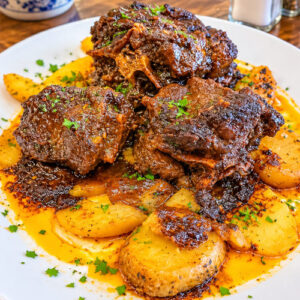
Rabo de toro means oxtail stew, and it’s proper old-school Andalusian comfort food. Cooks braise the tail slowly with wine, tomatoes, and vegetables until the meat falls apart. The dish likely began in Córdoba, tied to bullfighting culture and butchered bulls. Seville quickly adopted it, and Triana’s taverns still serve some of the best versions. Traditionally, nothing from the bull went to waste after a fight, oxtail included. The stew needs hours of slow cooking to break down the tough meat properly. Modern versions sometimes swap bull for beef oxtail, though purists still hunt for the real thing. Order it with bread for dipping, and settle in for a rich, hearty meal.
3 Places to try it
Casa Cuesta has served Triana since 1880, when it began life as a wine merchant’s tavern. Poets, artists, and bullfighters once gathered at this century-old bar. Rabo de toro remains one of its most requested dishes, served slow-cooked on the bone. Original tiles and a carved wooden bar still decorate the dining room. Booking ahead is wise, especially for dinner on busy weekends. Get directions.
Victoria 8 has served traditional Andalusian food from a Triana courtyard house since 2007. Chef José Juan de la Chica built a menu rooted in classic recipes with personal touches. Rabo de toro appears in six different forms, from classic stew to creative croquettes. The dining rooms feel intimate, decorated with paintings by the chef himself. Reservations are essential, and bookings are taken by phone only. Get directions.
Taberna Sol y Sombra has served bullfighting fans in Triana since 1961. Bullfighting posters and hanging hams cover every inch of the walls. Rabo de toro a la sevillana remains the dish most customers come here to order. The wooden bar and old-world decor add to its authentic, unpolished charm. Booking ahead is recommended, particularly for evening meals. Get directions.
Final Thoughts
Seville’s food culture rewards those who slow down and follow their nose. Espinacas con garbanzos, salmorejo, and rabo de toro each tell a story of resourceful Andalusian cooking. None of these dishes need a big budget or a stiff dining room to shine. Order at the bar, chat with the staff, and let the food do the rest. These plates taste better shared, alongside a cold beer or a glass of sherry. Next time you’re wandering Seville’s old streets, skip the tourist menus near the cathedral. The city’s best meals still come from its oldest, simplest bars.
Ready to start planning your adventure?
Your food journey doesn’t have to stop at three dishes. Our where to eat in Seville guide has plenty more bars and restaurants to try. Next, find a comfy base with our where to stay in Seville guide. Then fill your days with our things to do in Seville page. Short on time? Our 3 day food lovers itinerary for Seville shows you how to eat your way around the city. If you’d like more variety, try the 3 day itinerary for Seville instead.
Want to explore further? Our best day trips from Seville guide is full of easy escapes. Eating like a local is easier with our tips on how to order tapas in Spain and what time Spaniards eat dinner. These pages help you plan at home, and they’re just as handy once you arrive. So, bookmark them now and keep them on your phone while you’re in Spain. Your tastebuds are in for a treat, and we can’t wait for you to taste Seville!