
3 Foods to Try in Málaga
Málaga is a city made for hungry travellers. The sea sits on one side and the mountains rise on the other, so the food shows off both. Locals love simple dishes packed with flavour. In this guide, we share three tasty foods to try in Málaga: espetos, ajoblanco and porra antequerana. Each one tells a story about the city and its people. Better still, you can enjoy all three at friendly, down-to-earth places. So, bring your appetite and let’s get started. If you want even more ideas, take a look at our guide on where to eat in Málaga.
Espetos
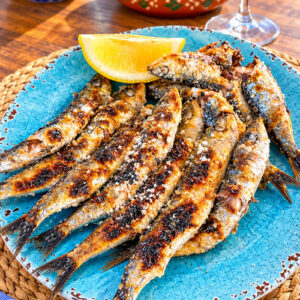
Espetos are Málaga’s most famous dish, and for good reason. Cooks thread fresh sardines onto long cane skewers. Then they grill them over olive wood. The fire burns inside a boat-shaped grill, called a barca, filled with sand. The result is smoky, salty and wonderfully juicy. The tradition began with local fishermen, who cooked their catch right on the beach. Today, the old fishing neighbourhoods of Pedregalejo and El Palo are the best places to enjoy it. Sardines taste best between May and September, when they are at their fattest. Locals eat them with their fingers, so skip the knife and fork. Look for the smoke, too. If you can smell grilled fish from the street, you are in the right place. Pedregalejo and El Palo sit just east of the centre, so they make an easy half-day trip. Many people pair lunch with a stroll along the seafront and a swim.
3 Places to try it
Las Palmeras began in 1980. María and Bernardo Murillo opened it on the Pedregalejo seafront. Today, the third generation of the family, led by Enrique Murillo, keeps the tradition alive. In 2024, the Academia Gastronómica de Málaga named it the best chiringuito (beach restaurant) of the year. It also won first prize in the Ruta Malagueña del Espeto in 2021. Besides sardines, try espetos of sea bream, squid and even octopus legs. The terrace fills up fast, so book a table online through its website. Get directions.
Restaurante El Tintero has fed hungry crowds since 1966. It sits right on the sand at El Palo, and it works in a very unusual way. There is no menu to read. Instead, waiters stride between the tables and shout the names of freshly cooked dishes. You raise your hand when something sounds good. At the end, the staff count your plates to work out the bill. Espetos appear alongside fried fish, prawns and paella. Weekends get lively, so arrive early or check its website about booking. Get directions.
El Caleño opened on the Pedregalejo promenade in 1987. Rafael Alcaide and his wife, Loli Ramírez, started the business. Today, Fabio Donofrio leads the team and keeps the same focus on fresh fish. Broadcaster Carlos Herrera has even praised its fried anchovies as the best in Spain. Locals also love its grilled espetos and seafood rice. Tables disappear quickly at weekends, so phone ahead to reserve. Get directions.
Ajoblanco
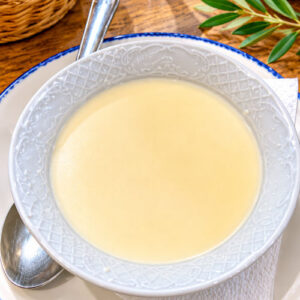
Ajoblanco is Málaga’s cool, creamy answer to a hot summer day. Cooks blend almonds, stale bread, garlic, olive oil and vinegar into a silky white soup. People often call it white gazpacho. In fact, it is much older than the tomato version. Cooks made it long before tomatoes reached Europe, and its roots lie in Moorish Andalusia. Farm workers relied on it to survive the fierce summer sun. Today, locals serve it ice cold with sweet muscatel grapes or melon. The nearby Axarquía region is its heartland. Every year, the village of Almáchar hands out free bowls at its Ajoblanco Festival on the first Saturday of September. Look for it on menus from late May to September, because many kitchens drop it in winter. Do not expect a pink soup. If it arrives with a tomato blush, it is not the real thing. A good ajoblanco is smooth, ivory-white and gently garlicky. It also pairs beautifully with a chilled glass of dry sherry.
3 Places to try it
Bodega Bar El Pimpi has poured sweet Málaga wine since 1971. It fills a rambling old bodega on Calle Granada, and its terrace faces the Roman Theatre. One cosy room honours La Repompa, a famous Málaga flamenco singer who performed there for years. Try the ajoblanco with mango, which adds a fruity twist. Then, pair it with a glass of sweet local wine. This place gets very busy, so book ahead for dinner or aim for a weekday lunch. Get directions.
Casa Lola is a short stroll from El Pimpi. The original taberna sits on Calle Granada, with blue and white tiles on the walls and vermouth on tap. Its ajoblanco malagueño shares the menu with croquetas and montaditos at friendly prices. Over time, Casa Lola has grown into a small group of taverns around the city centre. Queues can form, so arrive early. Alternatively, visit later in the evening, when the atmosphere is at its best. Get directions.
Mesón Mariano has served classic Málaga cooking on Calle Granados since 1988. Owner Mariano Martín Navas has worked in local hospitality for over fifty years, and he still checks the kitchen daily. The family restaurant is famous for its artichokes. Staff peel around 50 kilos of them every day. Ask for the ajoblanco, which appears on the menu when it is in season. Tables fill up about a week ahead, so reserve early. Solo travellers and small groups can often squeeze in at the bar. Get directions.
Porra antequerana
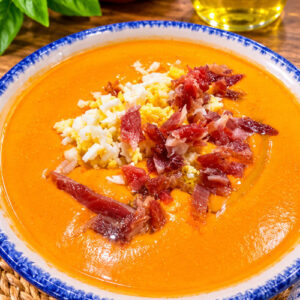
Porra antequerana is a thick, cold tomato soup from Antequera, about an hour inland from Málaga. It looks like salmorejo, but it feels richer and thicker. Cooks blend ripe tomatoes, bread, garlic, olive oil and green pepper. Then they top it with hard-boiled egg, serrano ham and sometimes tuna. The name comes from the porra, the wooden mallet once used to pound the ingredients. Many say the earliest version was white, made only with bread, garlic and oil. Tomato joined the recipe later. Some kitchens even make a winter version with oranges from the Guadalhorce Valley. Nowadays, locals enjoy porra all over the province, so you do not need to leave the city. Most places serve it as a small tapa in a bowl or glass. Order one to share, and you will soon want your own. Still, Antequera makes a great trip, so see our guide to the best day trips from Málaga.
3 Places to try it
La Casa del Piyayo sits on Calle Granada. It takes its name from Rafael Flores Nieto, known as “El Piyayo”. He was a well-known flamenco singer from Málaga’s El Perchel district. After a recent refurbishment, the tavern still keeps its old-fashioned charm. Order the porra antequerana with a plate of fried boquerones at the counter. Prices stay low, and the room is small. For that reason, aim for off-peak hours. Get directions.
Taberna Uvedoble gives Andalusian tapas a modern twist. Chef Willie Orellana shops at the Atarazanas market every morning, so the menu follows the seasons. His porra antequerana is a firm favourite, and he also serves it with tuna tataki. You will find the taberna in the heart of the old town, close to the cathedral. It fills quickly in the evenings and at weekends. Therefore, book ahead if you can. Get directions.
Cortijo de Pepe has fed locals on Plaza de la Merced since 1971. Picasso was born on this very square. Inside, old photos and Andalusian touches give the place a lovely 1970s feel. A long wooden bar runs through the room. Try the porra antequerana with tuna and ham, then add a plate of garlic prawns. You can reserve a table, or simply grab a spot at the bar. Get directions.
Ready to Taste Málaga?
Espetos, ajoblanco and porra antequerana show off the best of Málaga on a plate. Each dish is simple, honest and full of history. Better still, you can try all three without spending a fortune. Now it is time to plan your trip. Start with our guide to where to eat in Málaga for even more tasty spots. Next, build your days with our 3 day itinerary for Málaga. Then add some sights from our list of things to do in Málaga. Need a place to sleep? Check out where to stay in Málaga. Finally, if you fancy leaving the city for a day, explore the best day trips from Málaga. Buen provecho!