
Castilla-La Mancha
Castilla-La Mancha region is in central Spain. The region is the setting for Don Quixote by Miguel de Cervantes. Just like the story, it is dotted with castles, windmills, vineyards and mountains.
The region is bordered by Castile and León, Madrid, Aragon, Valencia, Murcia, Andalusia, and Extremadura. It has a population of 2 million people. The capital city is Toledo with a population of 85,000. The largest city by population is Albacete with 175,000 people. Other cities include Guadalajara, Talavera de la Reina, Ciudad Real and Cuenca.

Many of the best things to see in Castilla-La Mancha can be seen as day trips from Madrid. For example, a day trip to Toledo is a great way to break up your Madrid stay.
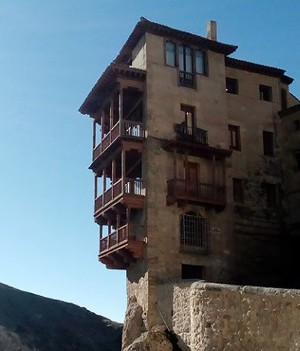
The hanging houses of Cuenca are also well worth seeing. Of course, there is no shortage of organised day trips available, so you don’t have to worry about organising a thing.
For a more detailed look at this exciting region, read Things to do in Castilla-La Mancha.
To help plan your visit, read our 7 Day Itinerary for Castilla-La Mancha full of helpful tips and guidance.
Towns of the Region
Read information and tips on these Castilla-La Mancha Cities and Towns:
Albacete – is renowned for centuries-old knife-making craftsmanship, surrounded by vast plains, agriculture, and traditional Manchego culture
Alcalá del Júcar – is a stunning village in Albacete province, perched dramatically on cliffs above the Júcar River, with cave-houses
Alcaraz – is a town that still feels wonderfully undiscovered, with cobbled lanes, a grand Renaissance square and mountains in the distance
Alcázar de San Juan – sits in the wide plains made famous by Don Quixote, linking it closely to Spain’s literary and cultural identity
Almagro – is a charming town famous for its Renaissance-era Plaza Mayor, historic Corral de Comedias theatre, and lace-making traditions
Almansa – is a town with big history and no crowds. It has a dramatic castle on a rocky hill above its old quarter, narrow lanes, elegant squares and cosy bars
Azuqueca de Henares – has developed rapidly in recent decades, and is one of the most dynamic residential and industrial centres in the region
Belmonte – offers religious monuments, museums and local traditions, creating a rewarding destination for travellers
Chinchilla de Montearagón – sits on a hill with a castle crowning the summit, and a medieval old town tumbling down the slope below
Ciudad Real – a relaxed city known for Don Quixote, historic churches, lively plazas, regional cuisine, museums and easy access to La Mancha’s beautiful countryside
Consuegra – is iconic for its hilltop windmills and medieval castle, celebrated for saffron cultivation and Don Quixote scenery
Cuenca – is a UNESCO-listed Castilla-La Mancha city famed for its dramatic “hanging houses” perched over gorges, medieval streets, and modern art museums
Daimiel – is a charming town famous for its wetlands, traditional streets, historic churches, local cuisine and close connection to Don Quixote country
Guadalajara – is a historic city near Madrid, known for the ornate Infantado Palace, rolling countryside, and a turbulent Civil War history
Hellín – is best known for its deep cultural traditions, ancient history and famous Semana Santa celebrations
Illescas – was used for centuries by Spanish monarchs as a resting point on their travels, filling it with grand buildings far beyond its size
Mora – Mora is famous for its extra virgin olive oil. You can climb to a castle, taste local oil and cheese, and chat with friendly locals
Puente del Arzobispo – sits proudly on the banks of the River Tagus, and it’s been making pottery for centuries and is wonderfully undiscovered
Puertollano – known for mining and energy production and is located at the foot of the Sierra Morena mountains
Seseña – sits quietly on the border of Madrid and Castilla-La Mancha. Few tourists stop here, yet the town holds real charm beneath the surface
Sigüenza – is a picturesque town with a striking medieval castle-parador, Gothic cathedral, and cobblestoned streets steeped in centuries of history
Tablas de Daimiel National Park – attracts birdwatchers and nature lovers for its rare wetland scenery, birdlife, and quiet walking trails
Talavera de la Reina – combines ancient traditions with modern life, creating a destination that feels both historic and lively
Toledo – is a UNESCO-listed former capital renowned for its blended Christian, Muslim, and Jewish heritage, dramatic hilltop setting, and iconic sword-making
Tomelloso – is famous for its wine production, underground wine cellars and strong cultural identity
Valdepeñas – is one of Spain’s most important wine towns, and it produces more wine than almost anywhere else in the country
Villarrobledo – is famous for its white wine production and for its deep agricultural roots
Getting to the region
The largest airport near the region is in Madrid. Flying time from London to Madrid is around 2 hours 25 minutes. There are flights available from most airlines and from most major cities in Europe and the world to Madrid.
Toledo is a 1 hour drive from Madrid. Hire a Car
Guadalajara takes about 50 minutes to drive from Madrid.
Cuenca is a 1 hour 50 minute drive from Madrid.
The train trip from Madrid to Toledo takes just over 30 minutes. Buy Tickets
The trip from Madrid to Cuenca takes about 50 minutes. Buy Tickets
From Madrid to Guadalajara can take from 40 minutes to 1 hour 20 minutes, depending on which train you catch. Buy Tickets