
The Balearic Islands: Spain’s Mediterranean Paradise
The Balearic Islands scatter across the sparkling Mediterranean, off Spain’s eastern coast. Four main islands make up this stunning region: Mallorca, Menorca, Ibiza, and Formentera. Each one offers something wonderfully different. Mallorca dazzles with mountains, culture, and buzzing city life. Menorca stays quieter, wrapped in prehistoric history and unspoilt coves. Ibiza balances legendary nightlife with peaceful hillside villages. Meanwhile, Formentera keeps things blissfully simple, with turquoise water and laid-back vibes. Whatever you’re after, this archipelago genuinely delivers. Let’s explore what makes the Balearics so special.
What to see and do
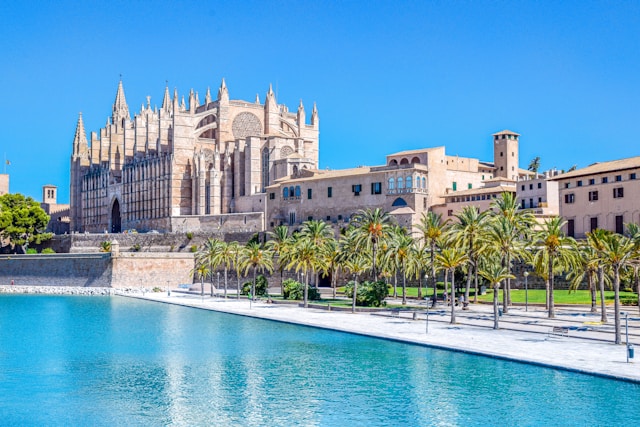
Start in Palma, Mallorca’s elegant capital, and admire La Seu Cathedral. This towering Gothic masterpiece sits right beside the sea. Its rose window and soaring interior genuinely take your breath away. Afterwards, wander up to Bellver Castle, a striking circular fortress overlooking the bay.
Next, head into the Serra de Tramuntana, Mallorca’s dramatic mountain range. This UNESCO World Heritage site hides pretty villages like Valldemossa and Deià. Winding roads reward drivers with sweeping sea and mountain views. For something different, ride the vintage Sóller train through orange groves and tunnels. Because seats sell out fast in summer, booking ahead makes real sense. Buy Tickets.
Underground, Mallorca hides another gem: the Cuevas del Drach near Porto Cristo. These vast limestone caves contain one of Europe’s largest underground lakes. Guided tours even include a short classical music performance by boat. Since visitor numbers are limited daily, pre-booking avoids disappointment. Buy Tickets.
Over on Ibiza, explore Dalt Vila, the island’s fortified old town. Cobbled streets climb steeply towards the cathedral and castle above. This UNESCO-listed quarter blends history with brilliant restaurants and boutique shops. Afterwards, gaze at Es Vedrà, a mysterious rocky islet off the southwest coast. Legends and myths surround this dramatic, almost otherworldly landmark.
On Menorca, step back thousands of years at Torre d’en Galmés, a remarkable Talayotic settlement. Ancient stone structures reveal how Bronze Age islanders once lived. Meanwhile, Mahón’s grand natural harbour offers boat trips, seafood, and colourful waterfront bars.
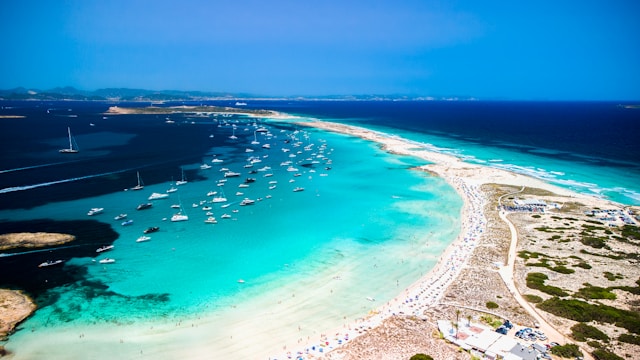
Finally, Formentera rewards visitors with some of Europe’s clearest water. Ses Illetes beach regularly ranks among the world’s best. Rent a bike and explore the island’s flat, easy coastal paths. Alternatively, hop on a boat trip around the coastline for a different perspective entirely.
If you’d like a more detailed rundown on what to see and do, read our 7 Day Itinerary for the Balearic Islands.
Islands and Towns of the Balearic Islands
Want to learn more about a specific town? Choose from the list below to read more about each town, including what’s on offer, where to stay and how to get there.
Alcúdia – offers something for everyone including culture lovers, sun-seekers, families and couples, there’s plenty to enjoy here
Arenal d’en Castell – is a purpose-built Menorcan resort wrapped around a golden, horseshoe-shaped bay that feels like a giant natural swimming pool
Cala Bona – is a former Mallorcan fishing village that has kept its charm, with a working harbour and a relaxed pace of life
Ciutadella – sits on the western tip of Menorca and offers unspoiled golden stone streets, grand old palaces and a busy little harbour
Es Caló de Sant Agustí – offers tiny whitewashed houses clustered around a natural harbour full of wooden fishing boats
Formentera – offers calm turquoise water, sleepy villages, and beaches that rank among the best in Europe
Fornells – offers whitewashed houses that tumble down towards the water, and fishing boats bobbing gently in the harbour
Ibiza – is famous for its nightlife, but there’s far more to this Balearic island than clubs
Ibiza Town – blends culture, cuisine, and coastline into one unforgettable destination
Inca – has earned the nickname “the city of leather” thanks to centuries of shoemaking
Mallorca – mixes buzzing city streets with quiet mountain villages and golden beaches sitting a short drive from ancient monasteries
Mahón – sits proudly on the eastern edge of Menorca with cobbled lanes winding past Georgian windows and pastel houses
Mallorca – mixes buzzing city streets with quiet mountain villages and golden beaches sitting a short drive from ancient monasteries
Manacor – is Mallorca’s second-largest town, famous for its pearls, its tennis legend, and its dramatic caves nearby
Menorca – offers turquoise water, prehistoric ruins, and towns that haven’t been overrun by development
Palma – sits on Mallorca’s southern coast blending history, beaches, and buzzing nightlife
Palma Nova – is a Mallorcan resort town that blends golden beaches, calm turquoise waters, and a laid-back holiday vibe
Santa Eulària des Riu – offers a palm-lined promenade winding along the seafront, dotted with cafés and boutiques
Santanyí – has managed to avoid mass tourism and development here has stayed respectful of the town’s history and character
Santa Ponsa – this Mallorcan resort town offers golden sand, calm water, and a lively promenade drawing families and couples alike
Sant Francesc Xavier – calm and low-key, with whitewashed houses lining narrow, cobbled streets around a pretty central square
Sa Pobla – offers wetlands, real Mallorcan food, and one of the island’s wildest winter festivals
Sineu – moves at a slower pace and is ideal for travellers who want an authentic taste of Mallorcan life, away from the tourist trail
Sóller – offers loads of charm as well as history, scenery or simply relaxing over a coffee
Valldemossa & Deià – composers, poets, and artists have fallen for these villages for centuries
Where to stay
For culture and city buzz, base yourself in Palma’s old town on Mallorca. You’ll be close to the cathedral, tapas bars, and boutique shopping streets. Evenings here feel lively, with plenty of restaurants and rooftop terraces.
Prefer nightlife and beach glamour? Ibiza Town and nearby Playa d’en Bossa deliver exactly that. Clubs, beach bars, and stylish hotels line this energetic stretch of coast. It suits travellers wanting late nights and lively daytime pool scenes.
Meanwhile, Menorca’s south coast offers a calmer, family-friendly alternative instead. Coves like Cala Galdana and Son Bou combine sandy beaches with gentle waters. This area suits those wanting relaxation over nightlife.
Finally, Formentera rewards visitors who base themselves near Es Pujols or La Savina. Both areas provide easy access to beaches, ferries, and seafood restaurants. Because rooms are limited across the smaller islands, book well ahead.
How to get to the Balearic Islands
Most travellers fly directly into one of three main airports. Palma de Mallorca Airport handles the busiest traffic, with flights from across Europe. Ibiza Airport and Menorca Airport both offer direct seasonal and year-round connections too. Book flights.
Alternatively, catch a train to a mainland port, then continue by ferry. Regular services run to Barcelona, Valencia, and Dénia, all offering island crossings. This route suits travellers keen to bring their own vehicle along. Check connections.
Once you’ve landed, hiring a car makes island-hopping exploration far easier. Mountain roads, hidden beaches, and rural villages reward those with their own transport. Hire a Car.
Driving between towns varies by island, though distances generally stay short and manageable. Mallorca’s motorways connect major towns quickly, while smaller islands favour scenic country roads. Already in Spain? Get directions.
Finally, ferries connect all four islands, making inter-island travel wonderfully straightforward. Regular crossings run between Mallorca, Menorca, Ibiza, and Formentera throughout the year. Booking ahead during summer helps secure your preferred sailing time.