
Ribera del Duero: A Complete Guide to Spain’s Wine Heartland
Ribera del Duero sits quietly along the Duero River in Castile and León. Yet its reputation stretches far beyond Spain. Bold red wines, medieval castles, and rolling vineyards define this region. Best of all, it stays wonderfully uncrowded compared to Spain’s coastal hotspots.
Foodies love it here too. Roast lamb, hearty stews, and local cheeses pair perfectly with a glass of Tempranillo. Meanwhile, history buffs can explore fortresses that once guarded the old Christian-Muslim frontier. So whether you’re a wine lover or a culture seeker, this region delivers something special.
This guide covers everything you need. We’ll show you what to see, where to stay, and how to get there. Let’s dive in.
What to see and do
Start your visit in Peñafiel, the unofficial capital of Ribera del Duero. Its 10th-century castle stretches like a stone ship along a ridge above town. Inside, you’ll find the Museo Provincial del Vino, a fascinating wine museum built into the fortress. Guided tours take you through winemaking history, tools, and tasting rooms with panoramic valley views.
Next, wander down to the Plaza del Coso. This medieval square once hosted bullfights and festivals. Wooden balconies line the space, giving it a rustic, timeless charm. Afterwards, pop into the Church of Santa María, which mixes Romanesque and Baroque styles beautifully.
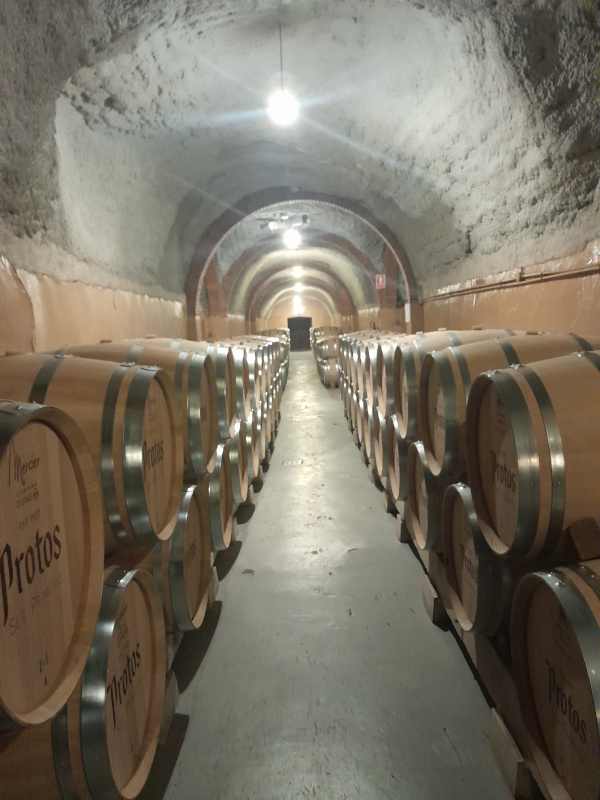
No trip here is complete without a winery visit. Bodegas Protos, founded in 1927, offers striking architecture by Pritzker Prize winner Richard Rogers. Tours take you through underground galleries carved beneath the castle itself.
For something truly legendary, book ahead at Vega Sicilia, Spain’s most celebrated winery, near Valbuena de Duero.
History lovers should also head to Burgos, roughly an hour away. Its Gothic cathedral is a UNESCO World Heritage Site and one of Spain’s finest.
Back in the wine country, don’t skip Roa, home to the Consejo Regulador, the body that governs the Ribera del Duero appellation. Its wine shops let you taste specialities without booking a full tour.
Finally, explore the region’s famous wine caves. Many villages hide centuries-old tunnels once used for storing barrels at a constant temperature. Some now double as atmospheric tasting rooms, so ask locally about guided cave visits.
Where to stay
Peñafiel town centre works brilliantly as a base. You’ll be steps from the castle, the wine museum, and Plaza del Coso. Restaurants and tapas bars cluster nearby, so evenings are easy and walkable. This spot suits first-time visitors who want everything close at hand. Book Accommodation.
Aranda de Duero makes a smart choice for foodies. The town sits at the region’s eastern edge and boasts an incredible underground cellar network beneath its streets. Stay near the old town for easy access to roast lamb restaurants and lively tapas bars. It’s also well connected to major roads, making day trips simple. Book Accommodation.
Valbuena de Duero and surrounding countryside suit travellers chasing a quieter, rural escape. Several converted farmhouses and boutique wine hotels sit among the vines here. Staying out here means waking up to vineyard views and easy access to Vega Sicilia and other top wineries. Book Accommodation.
Valladolid offers a livelier base if you’d rather stay in a bigger city. Choose a hotel near the historic centre, close to Plaza Mayor and the cathedral. From there, Ribera del Duero’s vineyards sit within easy reach by car, making it ideal for combining city culture with countryside wine trips. Book Accommodation.
How to get to Ribera del Duero
Flying is often the easiest option. Adolfo Suárez Madrid-Barajas Airport is the main gateway, with flights arriving from across the world. From there, it’s roughly a two-hour drive north to the heart of the region. Book flights.
Valladolid Airport sits much closer, though it handles fewer international routes. It’s a great option if you’re already travelling within Spain or connecting through another Spanish city. Book flights.
Prefer the train? High-speed services connect Madrid to Valladolid in under an hour. From there, local trains and buses reach smaller towns like Peñafiel and Aranda de Duero. Check connections.
That said, hiring a car gives you the most freedom. Many wineries and villages sit off the main routes, and public transport between them can be patchy. A car lets you explore at your own pace and stop wherever a view catches your eye. Hire a Car.
Driving from Madrid takes around two hours along the A-1 and A-11 motorways. The route is straightforward and well signposted the whole way. Already in Spain? Get directions.