
3 Foods to Try in Galicia
Galicia sits in Spain’s green, rainy north-west corner. It’s a land of rugged coastlines, ancient pilgrim routes, and seriously good food. Locals here take their meals seriously, but never too seriously. Meanwhile, the region’s cuisine leans on fresh, honest ingredients rather than fussy techniques. So, if you’re planning a trip, pack your appetite. This guide covers three iconic Galician foods, their backstories, and nine relaxed, unpretentious places to try them. None of these spots are fancy hotels or Michelin-starred dining rooms. Instead, they’re the kind of places locals actually eat.
Pulpo a la Gallega (Galician-style Octopus)
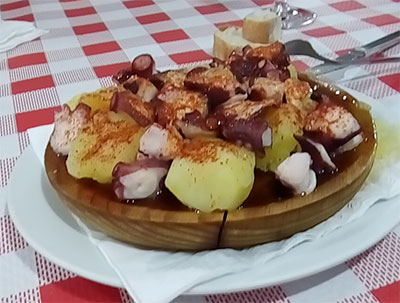
Pulpo a la Gallega, also called pulpo á feira, is Galicia’s most famous dish. Cooks boil tender octopus, then slice it with scissors onto a wooden plate. Next, they dress it with olive oil, coarse salt, and sweet or smoky paprika. The dish traces back to medieval market fairs, known as “feiras”, hence its name. Back then, travelling pulpeiras cooked octopus in huge copper cauldrons for hungry crowds. Curiously, the best pulpo often comes from Melide, a small inland town nowhere near the sea. Pilgrims walking the Camino de Santiago made Melide famous for this dish, and the tradition stuck. Today, families still pass down pulpeira skills through generations, and the ritual of eating it with toothpicks and crusty bread remains unchanged.
3 Places to try it
Pulpería Ezequiel has served pilgrims and locals in Melide for over five decades. The Camino de Santiago runs right past its door, and hungry walkers have made it a ritual stop for years. Generous portions and a lively, communal dining room keep people coming back. Consequently, tables fill up fast at lunchtime, so arrive early or expect a short wait. Get directions.
Pulpería A Garnacha opened in 2005, founded by Ernesto Pereira, a third-generation pulpeiro. His family has cooked octopus the traditional way for decades, and it shows in every plate. The restaurant sits right on the Camino de Santiago in central Melide. Besides octopus, it also serves excellent Galician-style cod and stewed beef. Given its popularity with pilgrims, booking ahead is a smart move in peak season. Get directions.
A Pulpeira de Melide brings four generations of pulpeiro know-how to A Coruña city. Despite its name, this relaxed spot sits in Plaza de España, not in Melide itself. The family menu changes daily, based on whatever the local market offers that morning. Octopus remains the undisputed star, though, cooked exactly as their ancestors intended. As it’s popular with locals, booking a table is worth doing at weekends. Get directions.
Empanada Gallega
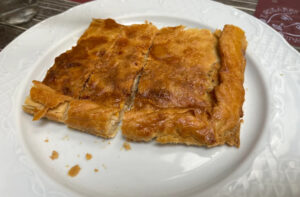
Empanada Gallega is a hearty pie made from bread-like dough, folded around a savoury filling. Fillings vary widely, from tuna and cod to pork, mussels, or spiced pork chorizo mince called zorza. Historians trace its roots back to Celtic and Roman times, when workers needed portable, sealed meals. Later, Camino pilgrims relied on empanada as a durable snack for the long walk to Santiago. Interestingly, a carved image on Santiago Cathedral’s Pórtico da Gloria, dating to the twelfth century, shows an empanada. That makes it one of Galicia’s oldest culinary symbols. Every village seems to guard its own family recipe, and the filling debate never really ends. Even so, everyone agrees on one thing: a good empanada needs a thin, crisp crust and a generous filling.
3 Places to try it
O Sendeiro is a Santiago de Compostela restaurant that won the prestigious Festa da Empanada competition. This annual contest, held in Silleda, celebrates Galicia’s best empanada makers each August. Locals rate O Sendeiro’s version among the finest in the whole region, made fresh with seasonal fillings. Given its award-winning reputation, it’s wise to call ahead before visiting. Get directions.
Panadería La Seyolca is a beloved artisan bakery in Vigo’s Lavadores neighbourhood. Locals consider it the go-to spot for traditional empanada, alongside fresh bread and homemade pastries. The bakery sticks to time-honoured methods, favouring quality over flashy modern twists. Since it’s primarily a bakery, no reservation is needed; simply drop by and grab a slice. Get directions.
La Tienda de Lino is a family bakery in A Coruña, built on a 25-year-old recipe. Staff still prepare every step by hand, including caramelising the onion filling from scratch. That old-fashioned dedication has earned it fans across Galicia and beyond. Nowadays, the bakery even ships empanadas worldwide, though the shop itself keeps things wonderfully simple. No booking is required, so just walk in and pick your favourite filling. Get directions.
Tarta de Santiago (Santiago Almond Cake)
Tarta de Santiago is a dense, moist almond cake dusted with icing sugar. Bakers stencil the Cross of Saint James on top, using a simple sword-shaped template. This iconic decoration dates only to 1924, added by José Mora Soto of Santiago’s Casa Mora bakery. However, the cake itself is far older, with roots in wealthy Galician households from the sixteenth century. Almonds were once imported luxuries, making this cake a special-occasion treat for centuries. Naturally gluten-free, the cake has since become a global favourite, even earning a spot on Business Insider’s list of the world’s best desserts. Pilgrims finishing the Camino often treat themselves to a slice as their reward.

3 Places to try it
Mercedes Mora stands on the very spot where the cake’s famous cross design was born. Run by descendants of José Mora Soto, this Santiago pastry shop keeps his original 1924 idea alive. The shop sits on Rúa do Vilar, in the heart of the old town. Because of its history, it draws steady queues of pilgrims and tourists alike. No reservation is needed; just pop in and pick up a slice. Get directions.
Pastelería A Confianza is a well-loved bakery in Vilalba, a market town in Lugo province. Beyond its almond cake, this family business bakes the region’s famous roscón bread rings. Its longstanding reputation comes from sticking closely to traditional recipes and methods. Walk-ins are welcome, since it operates as a straightforward neighbourhood bakery. Get directions.
Monasterio de San Paio de Antealtares offers a truly unique experience in Santiago’s old quarter. Cloistered nuns here bake and sell Tarta de Santiago through a small revolving hatch called a torno. This centuries-old tradition means you never actually see who hands you the cake. Given its charm, it draws curious visitors alongside regular pilgrims each day. There’s no need to book; just knock at the torno during opening hours. Get directions.
Conclusion
Galicia’s food scene rewards curious eaters who wander off the beaten path. Octopus, empanada, and almond cake each tell a story about the region’s history and people. Better still, you don’t need a fancy restaurant to enjoy any of them properly. Instead, seek out family-run pulperías, humble bakeries, and centuries-old convents. These are the places where Galician food traditions truly live on. So next time you’re in Galicia, skip the tourist traps. Follow the locals, trust your appetite, and taste the region one bite at a time.