
Palma: Your Friendly Guide to Mallorca’s Buzzing Capital
Palma, often called Palma de Mallorca, is the capital of Spain’s Balearic Islands. Sitting on Mallorca’s southern coast, it blends history, beaches, and buzzing nightlife. Whether you’re after culture, sunshine, or great food, Palma delivers all three with ease.
Firstly, the old town charms visitors with narrow streets and grand architecture. Meanwhile, the seafront promenade stretches for miles, perfect for a lazy stroll. Add in a Gothic cathedral, hilltop castle, and lively local markets, and you’ve got a city that rewards a proper explore. Best of all, Palma makes a brilliant base for day trips across the island.
What to see and do
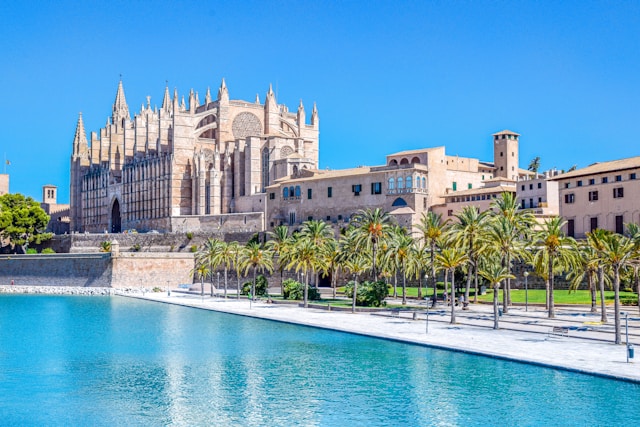
Start with the city’s showstopper: Palma Cathedral, known locally as La Seu. This soaring Gothic masterpiece overlooks the bay and took centuries to complete. Inside, don’t miss the huge rose window and Antoni Gaudí’s striking canopy above the altar. Because queues build quickly in summer, booking tickets in advance saves valuable holiday time.
Buy Tickets.
Just across from the cathedral sits the Royal Palace of La Almudaina. Originally a Moorish fortress, it later became a royal residence. Wander through royal apartments filled with tapestries and artwork, then enjoy views from the terrace gardens.
Next, head slightly out of the centre to Bellver Castle. This 14th-century hilltop fortress offers some of the best panoramic views in Palma. On a clear day, you can even spot the Serra de Tramuntana mountains. The castle also houses a small city history museum, adding useful context to your visit.
Art lovers should make time for the Joan Miró Foundation. This purpose-built museum showcases works by the Catalan artist, who lived and worked in Mallorca for years. It’s often overlooked by tourists, which makes for a wonderfully peaceful visit.
Afterwards, stretch your legs along the Paseo Marítimo, Palma’s long seafront promenade. Cycle paths and walkways run beside the water, past yacht-filled harbours and palm trees. Head west towards Portopí for seafood restaurants, or east to Portixol, a former fishing village full of whitewashed charm.
Finally, consider a day trip on the historic Palma to Sóller train. This century-old wooden carriage winds through mountains and orange groves on its way to the coast. It’s a wonderfully scenic escape from the city, and tickets often sell out in peak season. Buy Tickets.
Local festivals and traditions
Palma knows how to celebrate. The city’s biggest winter festival, Sant Sebastià, takes place every January. It honours Palma’s patron saint with a week of bonfires, concerts, and a fiery correfoc parade through the streets. Locals and visitors gather across the city’s squares, making it a brilliant introduction to Mallorcan culture.
Summer brings an even wilder tradition: Nit de Foc, or Night of Fire. Held on 23 June, the eve of Sant Joan, this festival fills Parc de la Mar with bonfires, fireworks, and devils running through the streets with sparklers. It’s loud, chaotic, and unforgettable, so bring earplugs if you’re sensitive to noise.
During Easter, Semana Santa processions move slowly through Palma’s old town. Robed penitents carry religious floats to the sound of mournful music, creating one of the most atmospheric religious events in the western Mediterranean. It’s a moving experience, even for visitors unfamiliar with the tradition.
Throughout the year, smaller events add extra colour to city life. Nit de l’Art sees galleries throw open their doors for one special evening, while sailing regattas bring international crowds to the harbour each summer.
Where to stay
For first-time visitors, the old town is hard to beat. Staying near the cathedral puts you within walking distance of major sights, restaurants, and shops. Expect charming boutique hotels tucked into historic buildings.
Alternatively, consider the seafront near Paseo Marítimo. This area suits travellers who want easy beach access alongside a lively bar and restaurant scene. It’s also handy for evening strolls along the promenade.
If you prefer something quieter, look towards Portixol or Es Molinar. These former fishing villages offer a slower pace, with charming whitewashed streets just a short walk from central Palma. They’re ideal for travellers who want authenticity without sacrificing convenience.
Whichever area suits you, Palma has accommodation to fit every budget and style. Book Accommodation.
How to get to Palma
Flying is by far the easiest way to reach Palma. Palma de Mallorca Airport sits just 8 kilometres from the city centre, making transfers quick and simple. It’s one of Spain’s busiest airports, with flights arriving from across Europe year-round. Book flights.
Once you’ve landed, buses run regularly between the airport and central Palma, taking around 20 to 30 minutes. Buy Tickets.
If you’re exploring further afield, Mallorca’s train network connects Palma to towns like Inca, Sa Pobla, and Manacor. The historic vintage train to Sóller is a highlight in itself, running since 1912 through mountain scenery. Check connections.
For maximum flexibility, hiring a car lets you reach hidden coves and hilltop villages at your own pace. Roads across the island are generally well maintained and easy to navigate. Hire a Car. Already on the island? Get directions.
Lastly, regular ferries connect Palma with mainland cities including Barcelona and Valencia, as well as the other Balearic Islands. This makes island-hopping or a scenic sea crossing an easy option too.
However you arrive, Palma rewards visitors who take their time. Between the cathedral, the beaches, and the buzzing old town, a couple of days here always feels too short.