
Things to Do on the Canary Islands
The Canary Islands sit off the coast of Africa, yet they belong to Spain. Thanks to a mild climate, you can visit any month of the year. Winter stays warm, while summer cools down with ocean breezes. Flights from the UK take around four hours. Better still, each island has its own personality. Tenerife has a towering volcano, Lanzarote has lunar landscapes, and La Palma has starry skies. To help you plan, here are fourteen highlights across the archipelago. Want a full route? Check our 7 day itinerary for the Canary Islands. You can also browse our Canary Islands guide for more ideas.
Mount Teide Cable Car
Start on Tenerife with the Mount Teide Cable Car. It climbs to 3,555 metres in about eight minutes, so you skip the hard walk. At the top, the volcanic views stretch for miles. On clear days, you can even see neighbouring islands. Wrap up warm, because the temperature drops sharply near the summit. Sunrise and sunset offer the most dramatic light. Queues build fast, so book ahead. Buy tickets on the official site. Learn more in our Teide National Park guide or our Tenerife guide. Buses climb the mountain from the north coast. Go early, because car parks fill up by mid-morning. Check Bus Schedules and secure your seat on Omio. Driving also works well. Hire a car with Discovercars. Already in Spain? Get directions.
Loro Parque
Families should head to Loro Parque in Puerto de la Cruz. This zoo started as a parrot park, and it now holds more than a thousand birds. You will also meet orcas, dolphins, penguins and sea lions. The shows run all day, so check the timetable on arrival. Queues can be long in high season, so buy your entry early. Buy tickets on the official site. Allow at least half a day. The park also has a lovely walk-through aviary and a huge aquarium tunnel. Kids will talk about it for weeks. Get directions.
Whale Watching off Costa Adeje
Few experiences beat spotting wild whales from a boat. The waters between Tenerife and La Gomera hold pilot whales all year. Dolphins often race alongside the boats, too. Cliffs and calm bays add to the scenery. Most trips leave from the marina in Costa Adeje. Choose a small boat for a closer, calmer trip. Spaces fill up quickly in summer, so book early. Buy tickets. Bring a hat, sunscreen and a light jacket. Responsible operators keep a safe distance from the animals. That protects the whales and makes for a more peaceful trip. Get directions.
Santa Cruz de Tenerife and Its Auditorium
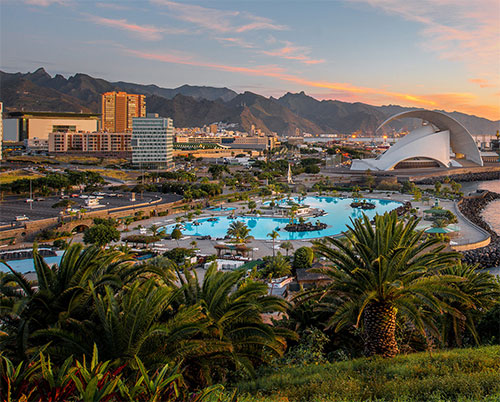
Next, explore Santa Cruz de Tenerife, the island’s relaxed capital. Its star building is the Auditorio de Tenerife, a white concert hall shaped like a giant wave. Architect Santiago Calatrava designed it, and it shines at sunset. In February, the city also hosts one of the biggest carnivals in the world.
The city also has pleasant plazas and a bustling market. Expect dazzling costumes, music and street parties. Pick up tickets for concerts online. Get directions.
Garajonay National Park
La Gomera hides a magical cloud forest in Garajonay National Park. Ancient laurel trees grow here, draped in moss and mist. The trails feel like a fairy tale. Locals once believed the mist held magic, and it is easy to see why. Birdsong echoes through the trees. Walk the short route to Alto de Garajonay for views across the islands. Ferries reach La Gomera from Tenerife in under an hour. The island also has its own whistled language, called Silbo Gomero. After landing, rent a car or join a tour. Hire a car with Discovercars. Pack a rain jacket, because the mist rolls in quickly. Get directions.
Caldera de Taburiente
On La Palma, the huge crater of Caldera de Taburiente will take your breath away. Steep green walls surround a deep valley full of pines and waterfalls. Hikers love the trails, which suit both beginners and experts. At night, the clear air makes La Palma one of the best stargazing spots on Earth. So, stay late and look up. On a clear night, the Milky Way stretches across the sky. Binoculars bring out even more detail. Book a guided stargazing tour for the best views. Get directions.
Maspalomas Dunes
Gran Canaria offers a mini Sahara at the Maspalomas Dunes. Golden sand ripples across a protected nature reserve. Walk barefoot over the crests, then cool off at the wide beach. The dunes look best in the early morning. Look out for the small palm oasis tucked between the sand. At that hour, the light is soft and the crowds are small. Bring plenty of water, because shade is rare. Nearby, a historic lighthouse stands at the edge of the sand. It makes a great spot for a sunset photo. Get directions.
Roque Nublo
Next, hike to Roque Nublo, an 80-metre rock spire in the heart of Gran Canaria. The trail starts near the Degollada de la Goleta car park, and it takes about 90 minutes round trip. Clouds often drift below you, which feels magical. Public buses stop far away, so most visitors drive. Hire a car with Discovercars. Start early to beat the heat and the crowds. The path is rocky in places, so wear proper shoes. At the top, the rock stands tall against the sky. Get directions.
Teror
For a taste of old Gran Canaria, visit Teror. Wooden balconies line the streets of this hill town. The air feels cooler here, which is a welcome break from the coast. Its basilica holds the island’s patron saint, Our Lady of the Pine. On Sundays, a lively market sells local cheese and sausages. Try the chorizo de Teror, a soft red sausage that locals love on bread. The town is also known for its sweet pastries. Leave time to wander the old streets. Buses run from Las Palmas to the town centre. Check Bus Schedules and secure your seat on Omio. Get directions.
Timanfaya National Park
Lanzarote looks like another planet in Timanfaya National Park. Black lava fields and red volcanoes stretch to the horizon. At the visitor centre, staff drop twigs into a hole, and they burst into flames. A restaurant even grills chicken over volcanic heat. Camel rides also climb the slopes, which makes a fun extra. The scenery is quite unlike anywhere else in Spain. Take the bus tour through the Fire Mountains for close views. Buy tickets on the official site. Get directions.
Jameos del Agua
Artist César Manrique turned a lava tube into Jameos del Agua, a stunning cave and concert space. Inside, a glowing blue pool hides tiny, rare white crabs. A garden terrace and restaurant sit in the open section. It shows how Manrique blended nature with art. Concerts sometimes take place in the natural auditorium. The acoustics are superb. Buy your entry in advance to skip the queue. Buy tickets on the official site. Nearby Arrieta and Costa Teguise make good bases. Get directions.
Corralejo Dunes
Fuerteventura boasts miles of pale sand, and the Corralejo Dunes are its best stretch. Turquoise water laps at the edge of a huge protected park. Windsurfers and kitesurfers love the steady breeze here. Even if you do not surf, you can swim, sunbathe or walk the shoreline. Read our Fuerteventura guide for more beaches. Corralejo town sits close by, so you can grab fresh fish for lunch. Boats also sail from the port to the nearby island of Lobos. Kids love the shallow, clear water. Get directions.
Betancuria
Inland, the village of Betancuria was Fuerteventura’s first capital. White houses and quiet lanes give it a sleepy charm. The old church of Santa María dates from the 15th century. Stop for a coffee in the shady square, then try the local goat’s cheese. The winding road through the mountains offers some of the island’s best views. Drive slowly and enjoy it. Several viewpoints make perfect photo stops. The village feels wonderfully peaceful. Hire a car with Discovercars. Get directions.
Papas Arrugadas with Mojo
No trip is complete without papas arrugadas. These small potatoes cook in very salty water until their skins wrinkle. Locals serve them with mojo, a sauce of garlic, oil and peppers. Each family has its own secret recipe. Red mojo is spicy, while green mojo tastes fresh and herby. You will find them on nearly every menu. Order a plate to share, and add grilled fish or goat’s cheese. It is simple food, but it is hard to forget. Pair it with a glass of local white wine. Then finish with a sweet bienmesabe dessert.
The Canary Islands reward every kind of traveller. Hikers, beach lovers, foodies and families all find something to enjoy. Pick one island for a relaxed trip, or hop between several if you have time. Pack sunscreen, a light jacket and comfy shoes. Inter-island ferries and short flights make hopping easy. Leave room in your suitcase for local cheese and wine. Most of all, stay curious. Then enjoy every sunny moment.
If you need help planning your visit, feel free to bookmark and use our 7 Day for Canary Islands Itinerary.