
Things to Do in Valencia Region
The Valencia Region runs down Spain’s sunny east coast, and it has something for everyone. You can wander futuristic buildings, climb medieval castles and swim in warm Mediterranean water. Summers are hot, while spring and autumn feel mild and pleasant. Even better, the food is superb, because this is the home of paella. The region covers three provinces: Castellón, Valencia and Alicante. To help you plan, here are fourteen highlights. Want a ready-made route? Try our 7 day itinerary for the Valencia Region. You can also browse our Valencia Region guide for more ideas.
City of Arts and Sciences
Start in Valencia city at the City of Arts and Sciences. Architect Santiago Calatrava designed these dazzling white buildings, and they look like a movie set. Inside, you will find a science museum, a planetarium-style cinema and Europe’s largest aquarium, the Oceanogràfic. The complex sits in a park of water pools, which makes for superb photos. Visit late in the day, when the light turns golden and the heat fades. Even if you skip the museums, the walk alone is worth it. Queues build in summer, so book ahead. Buy tickets on the official site. Our things to do in Valencia guide has more ideas. Already in Spain? Get directions.
Mercado Central
Next, step inside the Mercado Central, one of Europe’s biggest fresh food markets. The iron-and-glass building dates from 1928, and its tiled dome glows in the morning light. Hundreds of stalls sell fruit, seafood, ham and local oranges. Come hungry, because you can nibble as you browse. Try a cup of horchata, a sweet drink made from tiger nuts. Go early for the best choice and the smallest crowds. Locals shop here daily, so you will feel part of everyday life. Stall owners love a chat, even if your Spanish is limited. Read more in our guide to 3 foods to try in Valencia. Get directions.

Valencia Cathedral
Then, visit Valencia Cathedral in the heart of the old town. Its mix of Gothic, Romanesque and Baroque styles shows how the city grew. One chapel holds a chalice that many believe is the Holy Grail. Climb the Miguelete bell tower, too. It has around 200 steps, but the view over the rooftops is worth it. The old town around the cathedral has lively squares and tasty cafés. Linger there afterwards. Buy your entry online to skip the queue. Buy tickets on the official site. Get directions.
Paella and the Albufera
ou cannot visit without trying paella, and the best place is the Albufera, a lake south of the city. Rice fields surround the water, and the dish began in these very fields. Drive or take a bus to the fishing village of El Palmar, where family restaurants cook it over orange wood. Real Valencian paella uses chicken, rabbit and beans, not seafood. Look for the crispy golden rice at the bottom, called socarrat. Locals fight over it, so claim your share early. Afterwards, take a sunset boat trip on the lake. The water turns pink and orange, and the quiet feels magical. Buy tickets. Our where to eat in Valencia guide lists more spots. Get directions.
Another fun thing to do in Valencia is a Paella cooking class. Classes often include a visit to the market to buy produce. They are a great way to learn and eat. Search and book a class securely with Viator.

Need somewhere to stay in Valencia? Start your planning but keep your options open by searching for properties with Free Cancellation on Booking.com.
La Tomatina in Buñol
Do you fancy something wild? Join La Tomatina in Buñol, the world’s biggest tomato fight. Thousands of people throw ripe tomatoes in the streets on the last Wednesday of August. Wear old clothes and goggles, and expect a gloriously messy hour. Shops board up their windows, and fire trucks spray the streets clean afterwards. Entry needs a ticket, so buy early. Buy tickets on the official site. Trains run from Valencia in about 40 minutes. Check Train Schedules and Buy Tickets on Omio. Get directions.
Sagunto Castle and Roman Theatre
History fans should head to Sagunto, a short trip north of Valencia. A long hilltop castle walls the town, and the views reach the sea. Below it sits a Roman theatre that still hosts summer shows. Walk along the old walls, then wander the quiet lanes of the old Jewish quarter. The theatre dates from the first century, and the stone steps still feel grand. Trains from Valencia take around 30 minutes. Check Train Schedules and Buy Tickets on Omio. Get directions.
Santa Bárbara Castle
Now head south to Alicante and climb Santa Bárbara Castle. It sits on Mount Benacantil, 166 metres above the city. You can walk up or take a free lift from the seafront. The views across the bay are superb, especially at sunset. Inside, small museums explain the castle’s long history. Wander the terraces and gardens, too. Entry is free, so it suits any budget.
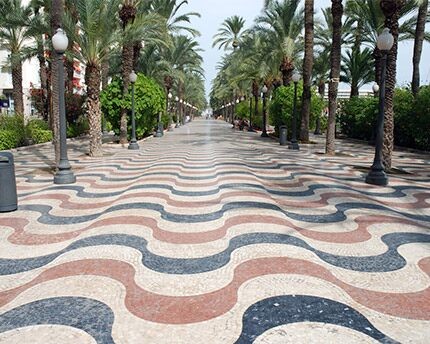
Afterwards, stroll the palm-lined promenade below. Bring water in summer, because the climb gets hot. See our things to do in Alicante guide for more. Get directions.
Need somewhere to stay in Alicante? Book accommodation securely with Booking.com.
Tabarca Island
Looking for a beach escape? Take a boat to Tabarca, Spain’s smallest inhabited island. A walled village sits at one end, and clear coves ring the shore. Snorkellers love the marine reserve, which teems with fish. Bring a mask, as the water stays crystal clear. Boats leave from Alicante and Santa Pola, and the trip takes under an hour. Book ahead in summer. Buy tickets. Try the caldero, a rich fish and rice stew, at a harbour restaurant. Stay for sunset, once the day boats leave. Get directions.
Elche Palm Grove
Elche hides Europe’s largest palm grove, with around 200,000 trees. UNESCO protects this oasis, which dates back to Moorish times. Wander the shady paths, then visit the Huerto del Cura garden. The city also tells the story of the Lady of Elche, an ancient Iberian bust. Visit in the cooler hours, because the sun is strong. Local shops also sell sweet dates from the palms. Trains run from Alicante in about 20 minutes. Check Train Schedules and Buy Tickets on Omio. Read more in our Elche guide. Get directions.
Peñón de Ifach
Dominating the skyline of Calpe, the Peñón de Ifach is a huge rock rising 332 metres from the sea. A nature park protects it, and a trail climbs through a short tunnel to the top. The view across the Costa Blanca is spectacular. Start early to avoid the heat. The climb takes roughly two hours round trip, and it gets busy at weekends. Bring water and sturdy shoes. Look out for peregrine falcons circling above the cliffs. Afterwards, relax on one of Calpe’s sandy beaches. Buses link Calpe with Alicante and Benidorm. Check Bus Schedules and secure your seat on Omio. Get directions.
Guadalest
High in the hills, Guadalest sits on a rocky crag above a turquoise reservoir. You enter through a tunnel carved in the rock. Narrow lanes lead to the old castle and a tiny church tower. The village also holds several quirky museums, including one of miniatures. Come early, because tour groups arrive by mid-morning. The drive up from the coast winds through lovely almond groves. Driving gives you the most freedom. Hire a car with Discovercars. Get directions.
Altea Old Town
Few towns look as pretty as Altea. White houses climb a hill to a church with a blue-tiled dome. Cobbled lanes wind between art studios, cafés and flower-filled corners. Climb to the church square for views of the bay. Then sit down for a seafood lunch near the promenade. Altea also stays quieter than nearby Benidorm. Artists have lived here for decades, and many sell their work in small galleries. The mood is relaxed and welcoming. Get directions.
Peñíscola Castle
Up the coast, Peñíscola sits on a rocky headland joined to the mainland by a sandy strip. A fortress built by the Knights Templar crowns the old town. Pope Luna, a medieval antipope, lived here in the 15th century. The sea views are superb. Film fans may spot the setting from the classic movie El Cid. Wander the whitewashed lanes, then taste local prawns in a harbour restaurant. Buses run from Valencia and Castellón. Check Bus Schedules and secure your seat on Omio. Get directions.
Morella
Finally, head inland to Morella, a walled hill town in the Castellón mountains. Medieval walls circle the old centre, and a ruined castle tops the hill. Inside, the Basilica of Santa María holds an ornate choir. The town is also famous for flaó, a sweet cheese-and-mint tart. Public transport is limited, so many visitors drive. The winding mountain road offers dramatic views of rocky peaks. Stay overnight if you can, since the streets feel magical after the day trippers leave. Hire a car with Discovercars. Get directions.
The Valencia Region offers sun, culture and great food in one easy trip. City lovers will enjoy Valencia and Alicante, while history fans will love the castles. Beach fans have hundreds of kilometres of coast to explore. Pick a base, then add day trips as time allows. Trains and buses make hopping between cities easy. Pack sunscreen, comfy shoes and a big appetite. Then enjoy every moment.